


In September 2023, we launched the first of the workshop series titled “Think Impact with ICs.” The workshop series serves two purposes. First, we want to provide our members with the opportunity to hear from world-leading experts who may be traditionally outside the domain of SSCS. Second, we are interested in exploring the synergies of these domains with our core expertise—ICs—that can be transformative.
In two years, this series has grown to be extremely popular, regularly attracting between 500 to 1000 registrants per workshop. If you are interested in the intersection between integrated circuits and emerging technologies, do not miss the next one!
Seminars are open to the public, no IEEE or SSCS membership is required to attend live events. All events are posted on the SSCS Events calendar.
Past Workshops
2026
Town Hall Meeting: IEEE Journal of Solid-State Circuits
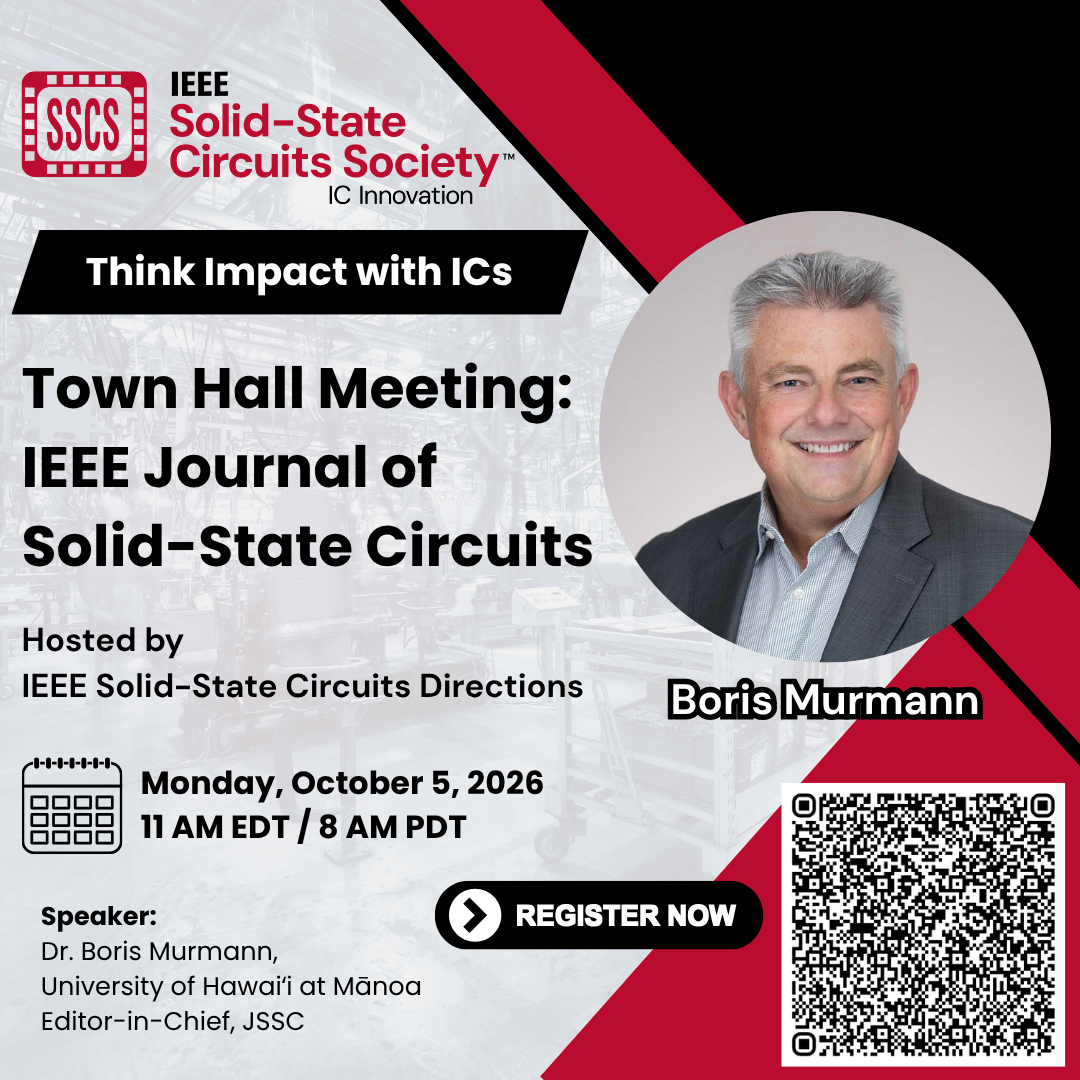
Abstract: The Journal of Solid-State Circuits (JSSC) has served as a flagship venue for many decades and remains more relevant than ever amid the ongoing semiconductor boom. The purpose of this webinar is to bring together JSSC’s stakeholders to discuss its current trajectories, provide guidance for authors, and solicit community input. The discussion topics will include submission trends, manuscript tips for authors, AI-related policies, and general considerations for the review process.
Bridging Neurotechnology and Clinical Applications

Title: Soft and Flexible Brain-Computer Interfaces, Presented by Jia Liu
Abstract: Understanding brain function through large-scale brain-computer interfaces (BCIs) is essential for deciphering neural dynamics, treating neurological disorders, and developing advanced neuroprosthetics. A major challenge in the field is to achieve simultaneous, large-scale, stable recording of neural activity, with single-cell resolution, millisecond precision, and cell-type specificity across three-dimensional (3D) brain tissue, throughout development, learning, and aging. In this talk, I will introduce a suite of soft and flexible bioelectronic technologies engineered to address this challenge in brain-computer interfaces. First, I will present tissue-like bioelectronics capable of tracking the activity of individual neurons in behaving animals throughout their adult lives. Then, I will discuss the electrochemical limitations of soft materials and our strategies to overcome them, establishing a scalable platform for large-scale, stable, and long-term brain mapping with a pathway toward human clinical translation. Next, I will discuss the creation of “cyborg organisms” by integrating stretchable, mesh-like electrode arrays into 2D sheets of stem/progenitor cells that undergo 2D-to-3D morphogenesis to form brain organoids or embryonic brains, enabling continuous 3D electrophysiological recording during development. I will then highlight how the brain’s dynamic nature—and the challenge of capturing neural changes over time—can be addressed by stable recordings enabled by flexible BCIs to decode intrinsic neural signal drift. These platforms support long-term, adaptive neural decoding and facilitate integration with neuromorphic algorithms for real-time interpretation of intrinsic neural dynamics. Building on this, I will introduce DriftNet, a deep neural network framework inspired by neural dynamics. DriftNet mitigates catastrophic forgetting, outperforming conventional and state-of-the-art lifelong learning models, and equips large language models with cost-effective, lifelong learning capabilities. Finally, I will present our latest efforts integrating 3D single-cell spatial transcriptomics, electrophysiology, and agentic AI to map brain activity with cell-type specificity. I will conclude by outlining a future vision in which soft and flexible electronics, spatial omics, and AI agents converge to construct a comprehensive brain cell functional atlas, transforming next-generation BCI applications.
Title: From Neurotechnology Discovery to Clinical-Scale Systems, Presented by Carolina Mora Lopez
Abstract: Neurotechnology is progressing from experimental research tools toward translational and clinical systems for recording, decoding, and modulating neural activity. This transition requires not only advances in neural interfaces, electronics, packaging, and data processing, but also solutions for long-term reliability, biocompatibility, power safety, manufacturability, regulation, and cost. This presentation discusses how shared R&D platforms and collaborations can help address these challenges. Using high-density CMOS neural probes as an example, it examines how diverse scientific and clinical requirements can be translated into common technology roadmaps, enabling broadly useful neurotechnology platforms while preserving opportunities for application-specific innovation.
Title: Human Single-Neuron Recordings: Data Acquisition, Processing, and Analytics, Presented by Shuo Wang
Abstract: Human single-neuron recordings provide a rare and powerful window into the neural basis of cognition, offering unmatched spatial and temporal resolution at the level of individual cells. In this talk, I will provide an end-to-end overview of how these data are obtained and analyzed in clinical intracranial recording settings. I will first describe the experimental and technical considerations involved in data acquisition, including electrode implantation, task design, and synchronization of neural and behavioral measurements. I will then discuss key steps in data processing, focusing on spike detection and spike sorting, as well as quality control and validation of single-unit isolation. Building on this foundation, I will present a case study from a human visual search paradigm to illustrate analytical approaches for linking single-neuron activity to behavior. Specifically, I will demonstrate how firing-rate dynamics, temporal coding, and population-level analyses can be used to characterize the neural mechanisms underlying visual attention, target selection, and memory-guided search. Together, this talk aims to provide both a practical introduction to human single-neuron methodologies and a conceptual framework for leveraging these data to address fundamental questions about how the human brain encodes, selects, and remembers information.
Watch Video
Download Slides
2025
From Chips to Genes: Next-Gen Diagnostics and Therapies

Abstract: The convergence of semiconductors, synthetic biology, and medicine is redefining the landscape of health technologies. Advances in solid-state platforms are driving new capabilities in genomics, cell and gene therapy, and single-cell biology, while innovations in DNA synthesis are creating novel opportunities for engineered diagnostics and therapeutics. In parallel, progress in disposable diagnostic devices is expanding access to rapid, low-cost testing, and ingestible and implantable systems are transforming how therapies are monitored and delivered inside the body. By integrating circuit and system innovations with synthetic biology and biomedical platforms, this workshop highlights how emerging technologies are converging to accelerate personalized medicine, expand access to global healthcare, and chart the future of precision diagnostics and therapies.
Watch Video
Download SlidesFrom Words to Circuits: Agentic AI, Foundation Models, and Open EDA Workshop

Abstract: How close are we to language-to-circuit design at scale? This SSCS webinar assembles researchers advancing foundation models, agentic workflows, and open EDA. Case studies include language-to-analog synthesis, multimodal diagnosis and optimization of analog front-ends, and AI-assisted RF/mmWave design with quantitative results. The session will conclude with a brief synthesis of open research challenges: data curation, provenance, verification, and sign-off hooks; safety/guardrails; and human-in-the-loop oversight, and will propose criteria for operational readiness.
Workshop on Reconfigurable Intelligent Surfaces; Standards, Design and Deployment
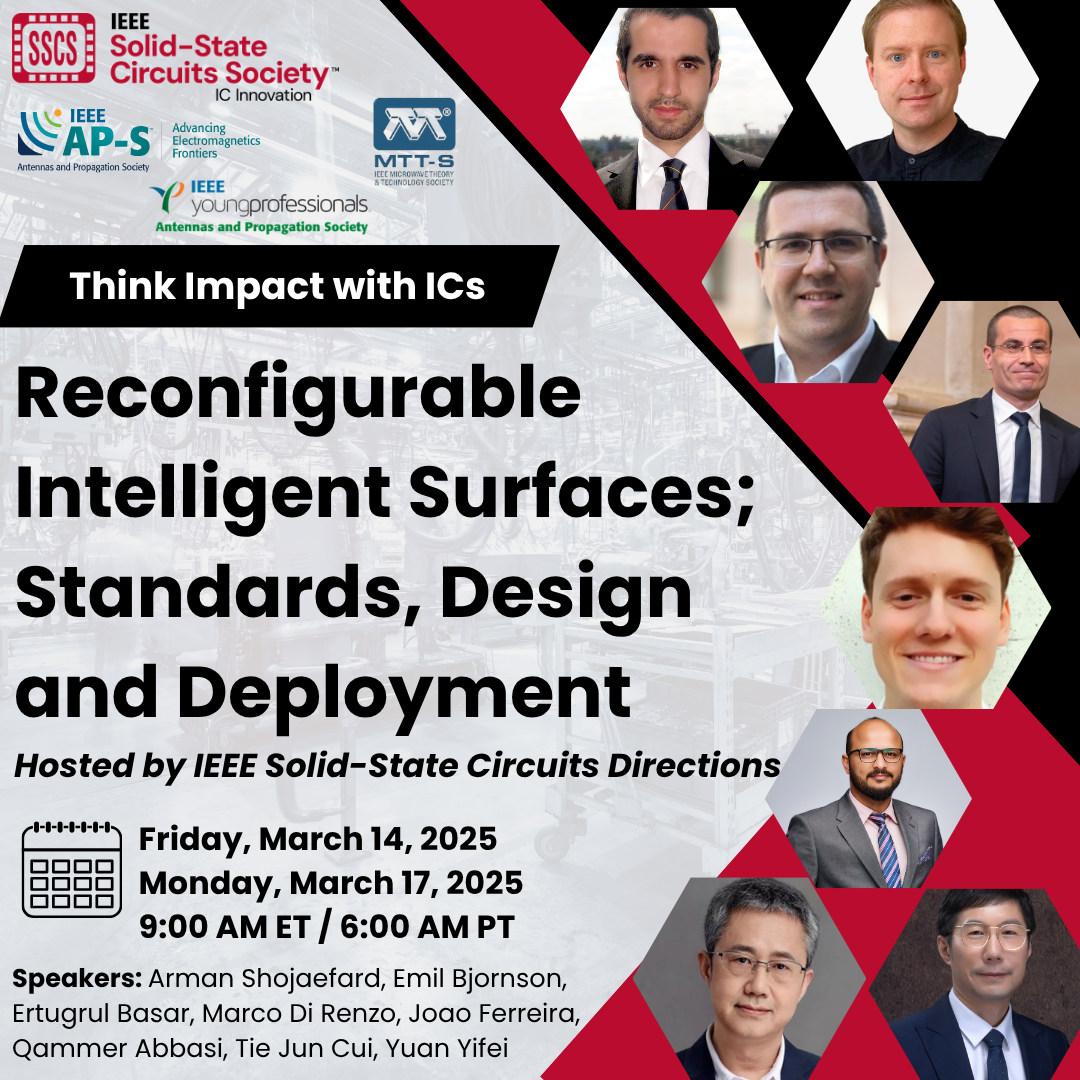
Abstract: The Workshop on Reconfigurable Intelligent Surfaces; Standards, Design and Deployment is a two-day event dedicated to exploring advancements and challenges in Reconfigurable Intelligent Surfaces (RIS) for next-generation communication systems. Leading experts from academia and industry will provide insights into RIS technology, from theory to practical application, highlighting challenges to help directions in future research. This workshop aims to foster collaboration and knowledge exchange, equipping attendees with a comprehensive understanding of RIS research, standardization, deployment, and testing methodologies, driving innovation in wireless communication systems.
Day 1 begins with an Reconfigurable Intelligent Surfaces: Vision, Fundamental Algorithms, and Practical Challenges by Dr. Emil Bjornson. This is followed by Dr. Arman Shojaeifard discussing Standardization Activities, and Dr. Ertugrul Basar addressing Network Deployment Challenges. The day concludes with Dr. Marco De Renzo’s session on RIS System Design Challenges focusing on stacked intelligent metasurfaces.
Day 2 covers specific applications and technical aspects. Dr. Qammer H. Abbasi will present on RIS for Indoor Applications and outdoor cellular bands, followed by Dr. Tie Jun Cui discussing Hardware Design and Various Types of RIS. Dr. Yifei Yuan will showcase RIS Study for 6G Mobile Communications, and Dr. Joao Ferreira will conclude with Test and Certification Challenges.
2024
Solid State Circuits and Devices in Extreme Radiation Environments
Abstract: This workshop on Solid State Circuits and Devices in Radiation Environments explores the challenges and design techniques for developing reliable semiconductor components and integrated circuits for harsh radiation conditions, such as those encountered in space, nuclear, and high-energy physics environments. Participants will gain in-depth insights into the basics and latest advancements in radiation-hardened design approaches and technologies, with a focus on several key topics.
System, Circuit, Device, and Packaging Co-Optimization for Next Generation AI Systems
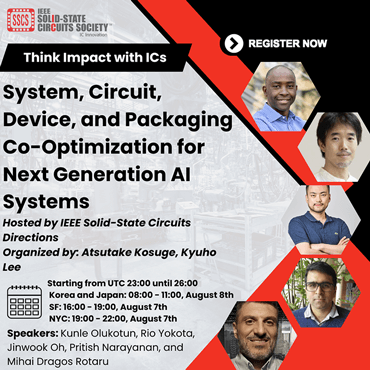
Abstract: In the past decade, Artificial Intelligence (AI) has made remarkable progress, from image processing to large language models. This rapid advancement has led to a significant increase in the complexity of AI models, which now require computational capabilities exceeding hundreds of peta-FLOPS. Consequently, there is a growing demand for advancements in AI hardware, encompassing systems, circuits, devices, and packaging. This demand highlights the essential contributions of the Solid-State Circuits Society (SSCS).
In response to these global needs, the upcoming SSCS workshop will focus on the co-optimization of systems, circuits, devices, and packaging for next-generation AI systems. The program features five distinguished speakers.
Firstly, Professor Kunle Olukotun, co-founder of SambaNova Systems and a professor at Stanford University, will share his insights on optimizing computing systems for training. Secondly, Professor Rio Yokota from the Global Scientific Information and Computing Center will discuss low-precision techniques and distributed training methods using supercomputers for large language model training. Thirdly, Dr. Jinwook Oh, CTO of Rebellion, will introduce AI accelerators for latency-critical Machine Learning applications. Fourthly, Dr. Pritish Narayanan from IBM will present on the optimization of Analog Compute-in-Memory accelerators. Lastly, Dr. Mihai Dragos Rotaru from A*STAR will discuss advanced packaging for efficient implementation of heterogeneous system chiplet.
We anticipate that this workshop will provide valuable insights into the comprehensive contributions and future directions of SSCS in realizing the potential of AI.
Quantum Computing and Technology Workshop
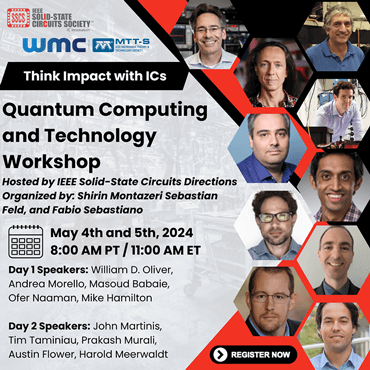
Abstract: SSCD presents a 2-day workshop on quantum computing and technology to bridge the gap between the physics community and electrical engineering. Various topics will conclude with simple hands-on algorithm experiments with an actual quantum computer on cloud.
2023
Non-Traditional Computing Paradigms with Emerging Technologies for Energy Efficiency Workshop

Abstract: As the power reduction through device scaling slows, exploratory materials, devices, and circuits are being examined to open new paths for achieving energy-efficiency especially as the demand for information storage and processing grows exponentially. This new-found freedom of breaking out of ‘‘CMOS scaling’’ introduces many new opportunities to do things completely differently—use a different material, invent a new device that operates on a different physical mechanism, and explore a new circuit function for computing that capitalizes on the unique properties of the new devices. Research in this area is truly multidisciplinary as it brings together the researchers who are focused toward the exploration of a new device and interconnect, or function for a more energy-efficient integrated circuit for computing. Computation based on the emerging devices is not limited to just digital information processing but also encompasses non-Boolean computation, including analog, neuromorphic computing, and novel concepts in computer automata. This two-day virtual workshop brings together leading researchers in this field to present the latest advances and to discuss the challenges and opportunities that are ahead of us.
ICs Addressing Societal Grand Challenges: Sustainability and Climate Change
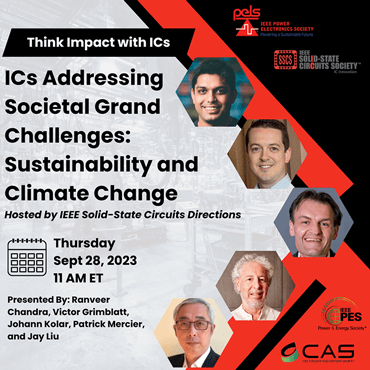
Abstract: Electronic circuits and systems leave an environmental footprint throughout their life cycle from mining, refining, processing, manufacturing, to end processing. Electronics circuits and systems play important roles in power delivery and environmental sensing. Renewable energy, electric vehicles, data centers, edge computing, smart agriculture, and IoT systems are deeply embedded in our living environment, and all leave their own carbon footprints and material footprints.