



Each year the IEEE Solid-State Circuits Society (SSCS) rotates out the five Members-at-Large whose term on the AdCom will be ending in December. This is done through the annual SSCS AdCom Election, which is organized by the SSCS Nominations Committee and chaired by the current SSCS Past President. For the 2025-2027 and 2026-2028 terms, John Long chaired the Nominations Committee. For the 2027-2029 and 2028-2030 terms, Bill Bowhill is chair.
The role of a Member-at-Large is to understand the society’s strategic plan, and consider and vote on motions aimed at supporting our strategy through new or modified programs and services. Members-at-Large, along with other AdCom members, are responsible for providing financial oversight, ensuring adequate resources for SSCS to fulfill its mission, ensuring legal and ethical integrity and effective organizational planning, recruiting and orienting new AdCom members, and enhancing SSCS’s public standing through involvement in the society’s various committees.
Petition Process for AdCom Candidacy
The 2026 petition period is closed. Please scroll down to learn about the 2027-2029 candidates.
If a Society member is not on the announced slate, they can petition to be on the slate.
Society members who are interested in nominating a colleague, or themselves, by petition should notify the SSCS Executive Office by email (), and include a statement verifying the nominee’s agreement to be a candidate. Once a petitioner’s eligibility is verified, he/she may be posted to the petition site until the petition process closes.
Any voting member of the Society may sign such petitions in either one of two ways:
- via a link to the petition website (to be provided by IEEE following notification of the SSCS Executive Office), or
- with an original signature on a hard copy petition.
There is no official IEEE hard copy petition form for society elections. Each handwritten petition form must include:
- the name of the candidate
- the title of the position the candidate is running for
For each person signing the petition:
- name (printed)
- IEEE member number
- signature
If all the signatures on the petition are valid—active members with their dues paid—the petition candidate’s name, biography, and photo will appear online and on the printed ballot.
To qualify for the slate, IEEE policy requires a petition candidate to collect signatures from 2% of the eligible voters. Signatures are verified during the petition process (additional signatures above the minimum are recommended as a safety factor.)
2027-2029 Member-at-Large Candidates
Below are the candidates nominated by the SSCS Nominations Committee for the SSCS AdCom Member-at-Large election, presented in alphabetical order. Please review their biographies and statements below.

Minoru Fujishima
Bio: Minoru Fujishima (Senior Member, IEEE) received his Ph.D. degree in electronics engineering from the University of Tokyo, Japan, in 1993. He has been a Professor at Hiroshima University since 2009. His research focuses on CMOS and BiCMOS circuit design and modeling, with recent emphasis on terahertz integrated circuits and ultra-high-speed wireless communication systems.
He is currently serving as a voting member of the SSCS Administrative Committee and as an Associate Editor of the IEEE Journal of Solid-State Circuits. He is serving as Technical Program Committee (TPC) Co-Chair of the IEEE Asian Solid-State Circuits Conference (A-SSCC) and will serve as TPC Chair in the following year. He previously served as Chair of the IEEE Japan Council Chapter Operations Committee and as an SSCS Distinguished Lecturer.
Statement: If elected as a Member-at-Large of the IEEE Solid-State Circuits Society (SSCS), I will work to enhance the timeliness, visibility, and global impact of the Society’s technical activities.
SSCS is distinguished by its flagship international conferences, such as ISSCC, which serve as premier venues for presenting breakthrough innovations in solid-state circuits. I will support efforts to strengthen coordination between SSCS conferences and peer-reviewed journals, enabling more timely dissemination of outstanding research while maintaining rigorous standards of review.
I also support ongoing SSCS initiatives that broaden participation in integrated circuit design. Programs that promote education, open collaboration, and accessible chip design play an essential role in cultivating future innovators. I am particularly interested in fostering stronger continuity between these initiatives and SSCS’s premier conferences and journals, supporting the progression from early design experiences to peer-reviewed publications.
Through these efforts, I seek to contribute to a more inclusive and globally connected SSCS while upholding its tradition of silicon-proven excellence.
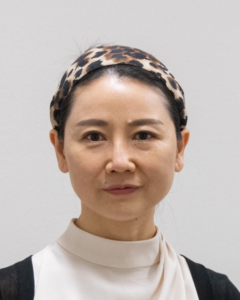
Jane Gu
Bio: Qun Jane Gu (M’07-SM’15) received the Ph.D. from the University of California, Los Angeles in 2007. Following a few years of industry and postdoc experience, she began her academic career in 2010 at the University of Florida. In 2012, she moved to the University of California, Davis, where she remained until August 2024. Since September 2024, she has been with the School of Electrical and Computer Engineering at Georgia Tech. Her research interests include high-efficiency, low-power interconnects, millimeter-wave and sub-millimeter-wave/terahertz integrated circuits and systems for communication, radar, and imaging. Her group has received nine best paper awards from various international conferences. Prof. Gu is a recipient of the 2013 NSF CAREER award, 2015 UC Davis Outstanding Junior Faculty Award, 2017 and 2018 Qualcomm Faculty Award, 2019 UC Davis Chancellor’s Fellow, and 2022-2023 IEEE Solid-State Circuits Society (SSCS) Distinguished Lecturer.
Currently, Prof. Gu is the Editor-in-Chief of IEEE Solid-State Circuits Magazine (SSC-M) and serves on the Technical Program Committee (TPC) and Steering Committee for the IEEE Radio Frequency Integrated Circuits Symposium (RFIC). She is also an Associate Editor for the IEEE Journal of Solid-State Circuits (JSSC). Previously, she contributed as a TPC member at several major conferences, including the International Solid-State Circuits Conference (ISSCC, 2020–2025), Custom Integrated Circuits Conference (CICC, 2017–2024), IEEE Asia Solid-State Circuits Conference (ASSCC, 2011-2017), Wireless and Microwave Technology Conference (WAMICON,2010-2013), and International Symposium on Radio-Frequency Integration Technology (RFIT, 2012-2015). Prof. Gu was on the Steering Committee for IMS2016 and served as Associate Editor for IEEE Microwave and Wireless Components Letters (MWCL, 2015–2017) and the VLSI Journal of Integration (2016-2019). In addition, she has been a Guest Editor or Associate Editor for IEEE Journal of Solid-State Circuits (JSSC, 2024-2026), IEEE Transactions on Microwave Theory and Techniques (T-MTT), and IEEE Solid-State Circuits Magazine (SSC-M, 2021-2026).
Statement: I am honored to be nominated for the position of Member-at-Large for the IEEE Solid-State Circuits Society (SSCS). My primary goal is to ensure that SSCS remains the premier home for integrated circuit innovators while advancing confidently into the new era of AI.
If elected, I will focus on three key pillars:
- Cross-Disciplinary Synergy: As AI permeates every domain, I will advocate for joint initiatives that connect SSCS with AI and neighboring fields such as biotechnology and quantum computing, ensuring that our society continues to play a leading role in shaping the future.
- AI-Driven Transformation: I will promote the proactive adoption and development of AI technologies to strengthen our society, making our processes more efficient, effective, and equitable. This includes areas such as publication review, member recognition, education, and conference organization, etc.
- Educational Pipeline: I aim to expand mentorship programs that connect experienced professionals with students, fostering a diverse and robust talent pipeline capable of addressing the growing complexity of the semiconductor industry.
I am committed to listening to our members’ needs and translating them into meaningful, actionable initiatives. Together, we can enhance the value of SSCS membership and drive the future of solid-state circuits.

Ulkuhan Guler
Bio: Ulkuhan Guler is an associate professor of Electrical and Computer Engineering and director of the Integrated Circuits and Systems (ICAS) Laboratory at Worcester Polytechnic Institute (WPI), MA, USA. Since 2024, she has also been a visiting scientist at the Massachusetts Institute of Technology (MIT), MA, USA. Before joining WPI in 2018, Dr. Guler was a postdoctoral researcher at Georgia Tech in Atlanta, GA, USA. She received her B.Sc. in Electronics and Telecommunication Engineering from Istanbul Technical University, Istanbul, Turkey; her M.E. in Electronics Engineering from the University of Tokyo, Tokyo, Japan; and her Ph.D. from Bogazici University, Istanbul, Turkey. Her research interests lie in the broad area of circuits and systems, with a primary focus on analog/mixed-signal integrated circuits. More specifically, she is interested in circuit design for sensing interfaces, bioelectronics, energy harvesting, wireless power transmission systems, and security for healthcare applications. Recently, her research interest has focused on determining how electronic interfaces can be engineered alongside biosensors to enable the development of wireless wearable sensors that measure physiological parameters in the human body. She is the recipient of the 2022 NSF CAREER award and the 2020 Interstellar Initiative Young Investigator award. She is a senior member of IEEE. She serves as an associate editor for several IEEE journals, including IEEE SSC-L, IEEE TBioCAS, and IEEE TCAS: II. Dr. Guler co-authored three book chapters, and she is also a co-inventor on seven patent applications. She serves as a steering committee member of the IEEE CICC, holding roles including TPC chair of CICC 2026 and TPC member of the IEEE BioCAS conferences.
Statement: Over the past eight years, I have had the privilege of actively serving the IEEE Solid-State Circuits Society community across a wide range of roles and responsibilities. My contributions span technical program committees, conference organization, editorial service, and community-building initiatives, including serving as CICC TPC Chair, Associate Editor for the IEEE Solid-State Circuits Letters (SSC-L), and taking on leadership roles within the Women in Circuits program.
Through these experiences, I have developed a deep appreciation for what makes SSCS a vibrant and impactful community: the quality of its technical discourse, the strength of its volunteer network, and its commitment to fostering an inclusive and diverse environment for circuit designers at every stage of their careers.
As a Member-at-Large, I would bring this hands-on experience and a genuine passion for community service to the Board of Governors. My priorities would include expanding professional development opportunities, strengthening mentoring and outreach programs, particularly for early-career engineers and underrepresented groups, and ensuring that SSCS conferences and publications continue to reflect the full breadth and innovation of our field.
I am grateful for everything this community has given me, and I would be honored to give back in this expanded capacity.
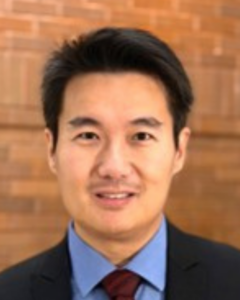
Ruonan Han
Bio: Ruonan Han received his B.Sc. degree in Microelectronics from Fudan University, Shanghai, China, in 2007, the M.Sc. degree in Electrical Engineering from the University of Florida, Gainesville, FL, USA, in 2009, and the Ph.D. degree in Electrical and Computer Engineering from Cornell University, Ithaca, NY, USA, in 2014. In 2014, he joined the faculty of the Massachusetts Institute of Technology (MIT), where he is currently a Professor in the Department of Electrical Engineering and Computer Science, the Associate Director of the Microsystems Technology Laboratories (MTL), the Director of the MIT Center for Integrated Circuits and Systems (CICS), and the Director of EECS Undergraduate Teaching Laboratories. His research mainly focuses on millimeter-wave and terahertz microelectronic circuits and systems for sensing, metrology, quantum, and security applications. He and his team have published more than 120 academic papers (including 20 papers at ISSCC). Han’s recent awards include the U.S. National Science Foundation CAREER Award in 2017, the Intel Outstanding Researcher Award in 2019, and the IEEE Solid-State Circuits Society New Frontier Award in 2023. He and his students also received three Best Student Paper Awards at the IEEE RFIC Symposium (2012, 2017, and 2021). He serves on the Technical Program Committees of the IEEE ISSCC (2022–present) and the IEEE RFIC Symposium (2018–present), and was an Associate Editor of IEEE Transactions on VLSI and IEEE Open Journal of SSCS. He also currently chairs the IEEE SSCS New Frontier Award Committee. He was a Distinguished Microwave Lecturer of the IEEE Microwave Theory and Technology Society from 2020 to 2022 and has been a Distinguished Lecturer of the IEEE Solid-State Circuits Society since 2025.
Statement: SSCS sits at a pivotal moment: semiconductor chips underpin breakthroughs in artificial intelligence, quantum technologies, autonomy, space, and biomedicine. To sustain this momentum, our community must expand its scope, technical innovation, and societal impact. If elected, I will contribute in three areas where I have direct experience.
- Technical breadth and emerging frontiers: My research spans mmWave/THz, sensing/metrology, quantum hardware, and security — areas where SSCS intersects with neighboring societies. I will strengthen cross-society initiatives, expand journal special issues on emerging topics, and ensure our flagship conferences remain the premier forum for both established and new directions. My conference service (ISSCC, RFIC, IMS) and SSCS award committee roles give me a clear view of where opportunities lie.
- Bridging a fragmenting global landscape: Geopolitical tensions and divergent regional ecosystems increasingly threaten the open exchange of ideas that has long defined our field. Through my MIT professorship and service as an SSCS and MTT-S Distinguished Lecturer, I have seen this fragmentation firsthand. I will work to keep SSCS a truly global, neutral platform that preserves scientific dialogue and cross-border collaboration.
- Innovation in education and democratized access: I will champion agentic/LLM-based circuit learning tools, cost-effective design-verification platforms, and open-source PDK/EDA pipelines that lower barriers for STEM students and extend high-quality IC education to less-developed regions.

Mondira (Mandy) Pant
Bio: Dr. Mondira (Mandy) Pant is a distinguished technology leader and strategist with over 25 years of experience spanning foundational circuit design to global research ecosystem management. Currently serving as Senior Director at Intel, Mandy leads strategic initiatives at the critical junction of product design and advanced foundry technology. Her career is defined by a rare duality: deep technical mastery in energy-efficient microprocessor designs and power delivery, combined with executive oversight required to drive industry-wide innovation programs.
Prior to her current role, Mandy served as a TA to Intel’s Head of Design Engineering, advising on critical engineering decisions, and directed Intel’s Corporate Research Council, where she fostered global academic-industry-government partnerships. Her career began with hands-on VLSI design for Intel’s server processors, including developing foundational library components such as latches and standard cells; a role that cemented her technical expertise and remains the bedrock of her leadership approach.
A steadfast advocate for the solid-state circuits community, Mandy has been a cornerstone of IEEE leadership. Her extensive service includes chairing the IEEE Computer Society TCVLSI and serving as Editor-in-Chief of its newsletter. Most notably, she has dedicated years to nurturing the next generation of engineers as Co-Chair of the Student Research Preview (SRP) and the Next-Generation Designers Workshop at ISSCC. She has served on technical committees for DAC, ICCAD, ISLPED, and MWSCAS, and is a frequent keynote speaker at premier conferences and universities worldwide.
Mandy holds a Ph.D. and an MS from Georgia Institute of Technology, Atlanta, and a B.Tech from IIT Kharagpur, India. With 20+ technical papers and 8 patents (issued/pending), she will bring to the AdCom a visionary perspective on the future of VLSI, a proven track record of cross-functional leadership, and a deep-seated commitment to the growth and global influence of the SSCS.
Statement: I am committed to leveraging my experience at the intersection of product design and technology pathfinding to ensure that SSCS remains the premier home for semiconductor innovation. My plans to support SSCS AdCom focus on three strategic pillars:
- Bridging the Design-Technology Gap: As we navigate the complexities of advanced nodes and heterogeneous integration, I will advocate for programs that strengthen synergy between circuit designers and foundry technology teams. My goal is to ensure our educational resources and conferences, such as ISSCC and the VLSI Symposium, continue to provide cross-disciplinary insights essential for future industry leadership.
- Empowering Next-Generation Talent: Building on my work with the Next-Generation Designers Workshop, I will champion initiatives that lower the barrier to entry for early-career professionals and students. I aim to expand mentorship frameworks and professional development services that foster a diverse and resilient global community.
- Operational Excellence and Strategic Oversight: I will provide rigorous financial and ethical oversight to safeguard our resources. By engaging deeply with standing committees, I will work to streamline our organizational planning, ensuring the Society’s services evolve to meet the shifting needs of our members.
It would be an honor to serve the community that has been foundational to my professional journey.
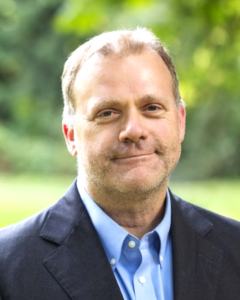
Christopher Jacques Rudell
Bio: Jacques “Chris”tophe Rudell received degrees in electrical engineering from the University of Michigan (BS), and UC Berkeley (MS, PhD). After finishing his PhD, he worked as an RF IC designer at Berkana Wireless (now Qualcomm) and Intel Corporation. In January 2009, he joined the faculty at the University of Washington, where he is now a Professor of Electrical and Computer Engineering.
While a PhD student at UC Berkeley, Dr. Rudell received the Demetri Angelakos Memorial Achievement Award, a citation given to one student per year by the EECS department. He has twice been a co-recipient of best paper awards at the IEEE International Solid-State Circuits Conference (ISSCC), the first of which was the 1998 Jack Kilby Award, followed by the 2001 Lewis Winner Award. He received the 2008 ISSCC best evening session award, the best student paper awards at the 2022 IEEE European Solid-State Circuits Conference (ESSCiRC), and at the IEEE Radio Frequency Integrated Circuit (RFIC) Symposium in 2011 and 2015. Dr. Rudell is the recipient of the National Science Foundation (NSF) CAREER Award. He was a technical program committee reviewer for ISSCC (2003-2010) and recently re-joined the committee in 2025. He served on the IEEE Radio Frequency Integrated Circuits (RFIC) Symposium steering committee (2002-2013), where he was the 2013 General Chair, and on the technical program committee of the IEEE Custom Integrated Circuits Conference (2018-2024). He has been an Associate Editor for the IEEE Journal of Solid-State Circuits (2009-2015). At present, he chairs the Wireless Systems subcommittee of ESSERC (2019 – present) and ISSCC (2025- present), and is the co-chair of the “Americas” (AMS) Region for the 2027 ISSCC. Lastly, Dr. Rudell is the founding Chair of the IEEE Solid-State Circuit Society Seattle Chapter.
Statement: Both the COVID supply chain shortage and the advent of AI hardware solutions have led to renewed global interest in education and research related to the semiconductor industry. Similarly, student enrollment in EE programs has trended upward, increasing the output of university IC research papers. As a result, all affiliated SSCS conferences and journals are experiencing rapid growth in paper submissions.
While this trend appears healthy on the surface, maintaining paper quality, balancing reviewer workload, and ensuring fairness in the paper selection process present new challenges for SSCS conferences and journals. Whether using single- or double-blind review, I will work to improve fairness in the review process while exploring strategies to increase the number of high-quality publications.
This effort includes increasing the participation of women and underrepresented groups in the review and publication of outstanding IC research. I have worked diligently to increase the number of female reviewers at the SSCS conferences I am involved in, and I will continue to support the Women in Circuits initiative, of which one of my female graduate students is a leader.
Finally, as an AdCom member, I will work to advance the goals outlined in the SSCS five-year plan.

Wanghua Wu
Bio: Wanghua Wu has been an IEEE member since 2007. She received her B.Sc. (with honors) from Fudan University in 2004, and her M.Sc. (cum laude) and Ph.D. from Delft University of Technology in 2007 and 2013, respectively. Currently, she is a Senior Director at Samsung Semiconductor Inc., USA, where she leads an engineering team delivering high-performance analog and mixed-signal ICs for cellular and connectivity transceivers. Her leadership is defined by a “product-first” approach, successfully steering teams to deliver complex chipsets that power millions of wireless devices worldwide. By bridging the gap between advanced architectural concepts and high-volume commercialization, she has established herself as a key driver of next-generation wireless infrastructure. Previously, she was an RFIC Design Engineer at Marvell.
A globally recognized expert in frequency synthesis, Dr. Wu built her technical foundation during her pioneering PhD research on 60-GHz all-digital PLLs (ADPLLs), which earned her the Broadcom Foundation University Research Competition award. She has published over 30 papers in flagship IEEE SSCS journals and conferences, holds 10+ patents, and has authored several influential books on CMOS frequency generation. An active educator, she has delivered numerous workshop talks and technical lectures on low-jitter phase-locked loops (PLLs).
Dr. Wu is an active leader within the IEEE Solid-State Circuits Society (SSCS). She served as an SSCS Distinguished Lecturer (2022–2023) and currently serves as an Associate Editor for the IEEE Journal of Solid-State Circuits (JSSC) and the IEEE Open Journal of the SSCS. Her commitment to excellence was recognized in 2024 with the SSCS Outstanding Reviewer award. She is a long-standing member of the Technical Program Committees for the International Solid-State Circuits Conference (ISSCC), the Custom Integrated Circuits Conference (CICC), and the Radio Frequency Integrated Circuits Symposium (RFIC).
Deeply committed to the future of the field, Dr. Wu is an active member of the Women in Circuits Committee, fostering professional opportunities for female engineers. She also acts as a strategic bridge between industry and academia, coordinating joint research projects and mentoring the next generation of designers.
Statement: The SSCS is the vital heartbeat of the solid-state community, but its future strength depends on deepening its integration with industry. As a Senior Director at Samsung Semiconductor and an active SSCS volunteer—having served as a Distinguished Lecturer (2022–2023) and currently as an Associate Editor for both JSSC and OJ-SSCS—I bring a ‘product-first’ mindset honed by navigating the complexities of high-volume commercialization daily.
If elected as Member-at-Large, I will act as a strategic liaison to ensure SSCS activities remain essential to the industrial practitioner through three actionable goals:
- Driving Industry Synergy: I will leverage my professional network to attract new sponsorships and encourage peers to contribute to technical forums, thereby fostering a ‘virtuous cycle’ in which commercial challenges inspire academic breakthroughs.
- Expanding Global Outreach: Building on my experience as a Distinguished Lecturer, I will continue to deliver technical webinars to local chapters and promote SSCS activities to attract a broader base of students and professionals.
- Cultivating the Next Generation: Drawing on my work with the Samsung CSR (Corporate Social Responsibility) Committee and Women in Circuits, I will champion inclusive mentorship programs that empower diverse talent to translate their research into impactful, sustainable, and world-changing products.
I am committed to ensuring our society remains the global leader in both technical innovation and practical excellence.

Milin Zhang
Bio: Milin Zhang is an associate professor in the Department of Electronic Engineering, Tsinghua University. She received the B.S. and M.S. degrees in electronic engineering from Tsinghua University, Beijing, China, in 2004 and 2006, respectively, and the Ph.D. degree in the Department of Electronic and Computer Engineering, Hong Kong University of Science and Technology (HKUST), Hong Kong. After finishing her doctoral studies, she worked as a postdoctoral researcher at the University of Pennsylvania (UPenn). She joined Tsinghua University in 2016. Her research interests include designing smart sensors, sensor interface circuits, and system design for biomedical applications.
She has served as a TPC member of ISSCC, CICC, A-SSCC, and CASS, the Senior Associate Editor (SAE) of TCAS-II, and the Associate Editor (AE) of TBioCAS. She is the Chapter chair of the SSCS Beijing chapter. She is/was the Distinguished Lecturer of IEEE SSCS, IEEE CASS, and IEEE WiE. She has received the Best Paper Award of the BioCAS Track of the 2014 International Symposium on Circuits and Systems (ISCAS), the Best Paper Award (1st place) of the 2015 Biomedical Circuits and Systems Conference (BioCAS), the best student paper award (2nd place) of ISCAS 2017, and the Best Paper Award of ICM 2024.
Statement: I am running for SSCS Member-at-Large to help broaden the Society’s impact and engagement across regions, career stages, and application domains, while preserving SSCS’s technical excellence. Through service as an ISSCC TPC member, SSCS Beijing Chapter Chair, and mentor of the SSCS Tsinghua Student Chapter, I have seen how strong local communities and high-quality programming accelerate both professional growth and innovation. I have also served SSCS through webinars and related committees, learning how to scale activities that reach members globally.
As an elected Member-at-Large, I would focus on three contributions:
- Strengthen the bridge between flagship conferences and year-round learning: As LEAP Special Session Chair at A-SSCC, I have organized cross-disciplinary sessions that invite leading experts to share frontier advances since 2023; I would expand this model via SSCS webinars, tutorials, and short courses that translate emerging research into practical design insight.
- Empower chapters and student chapters by providing reusable content, mentorship networks, and best-practice guidelines to improve the member experience worldwide.
- Increase SSCS’s influence in adjacent industries: As an engineer working at the intersection of circuits and biomedicine, I will promote more engagement with fields such as health, sensing, and AI, creating new pathways for collaboration and membership growth.
I would bring a global perspective, proven execution, and commitment to serving SSCS members.

Zhengya Zhang
Bio: Zhengya Zhang received the B.A.Sc. degree in computer engineering from the University of Waterloo, Canada, in 2003, and the M.S. and Ph.D. degrees in electrical engineering from the University of California, Berkeley, in 2005 and 2009, respectively. Since September 2009, he has been with the Department of Electrical Engineering and Computer Science at the University of Michigan, Ann Arbor, where he is currently a full professor. His research focuses on low-power, high-performance VLSI circuits and systems for computing, communications, and signal processing. Dr. Zhang was a recipient of the National Science Foundation CAREER Award, the Intel Early Career Faculty Award, the University of Michigan Neil Van Eenam Memorial Award for contribution to teaching, and the David J. Sakrison Memorial Prize for doctoral research from UC Berkeley. He has served on the Technical Program Committees for ISSCC, VLSI, and CICC, and has been an associate editor for TVLSI, TCAS-I, and TCAS-II, a guest editor of JSSC. Dr. Zhang has served as a Distinguished Lecturer for the IEEE Solid-State Circuits Society. He is an IEEE Fellow.
Statement: The IEEE Solid-State Circuits Society should be a place where undergraduates, graduate students, early-career engineers, and new faculty can quickly find community, build practical skills, and see clear pathways to get involved. If elected Member-at-Large, I will focus on lowering barriers to participation and expanding opportunities for prospective and new members to contribute and grow. I will support more student- and early-career-focused programs that are accessible and high-impact: chapter-to-chapter seminar exchanges, lab-to-silicon “how it really works” talks, and small-group mentoring circles that connect students with engineers and faculty across academia and industry.
To make SSCS events and conferences easier to navigate, I will advocate for clearer on-ramps – first-time attendee orientations, student and Young Professional meetups, and well-defined volunteer roles with lightweight training, so newcomers can contribute as session assistants, chapter event organizers, or reviewer trainees.
Finally, I will work with chapters and committees to proactively welcome new student members and young researchers, recognize their contributions through showcases and awards, and ensure SSCS programs are visible and easy to access, so members can fully benefit from what SSCS offers at every career stage.
Questions?
If you have any questions, please email the Society Administrative Office.