





Abstract:
In the past decade, there has been a growing interest in developing AI-embedded neural interfaces for various neurological disorders and brain-computer interface (BCI) applications. The focus has shifted from raw signal acquisition and data compression for off-body processing to intelligent systems featuring on-site signal processing, neural biomarker extraction, and AI. In this webinar, I will discuss the key characteristics, design trade-offs, and recent advances in CMOS-based systems-on-chip (SoCs) for diverse categories of intelligent neural prostheses, including real-time symptom tracking and closed-loop stimulation, intelligent BCIs for movement and communication recovery following paralysis or spinal cord injury, and beyond.
Building on these foundations, I will present recent directions pushing the field forward: compute-in-memory processors that enable low-power neural decoding, processors that generalize to unseen patients without patient-specific training, and advanced decoders for motion-intention and brain-to-text applications. Throughout, silicon results from recent prototypes illustrate the circuit- and system-level design choices that make implant-scale intelligence practical, and the discussion closes with open challenges and an overview of where the field is heading.
Speaker: Prof. Mahsa Shoaran (EPFL)
Date: Monday, November 23, 2026
Time: 9:30 AM ET
About the Speaker
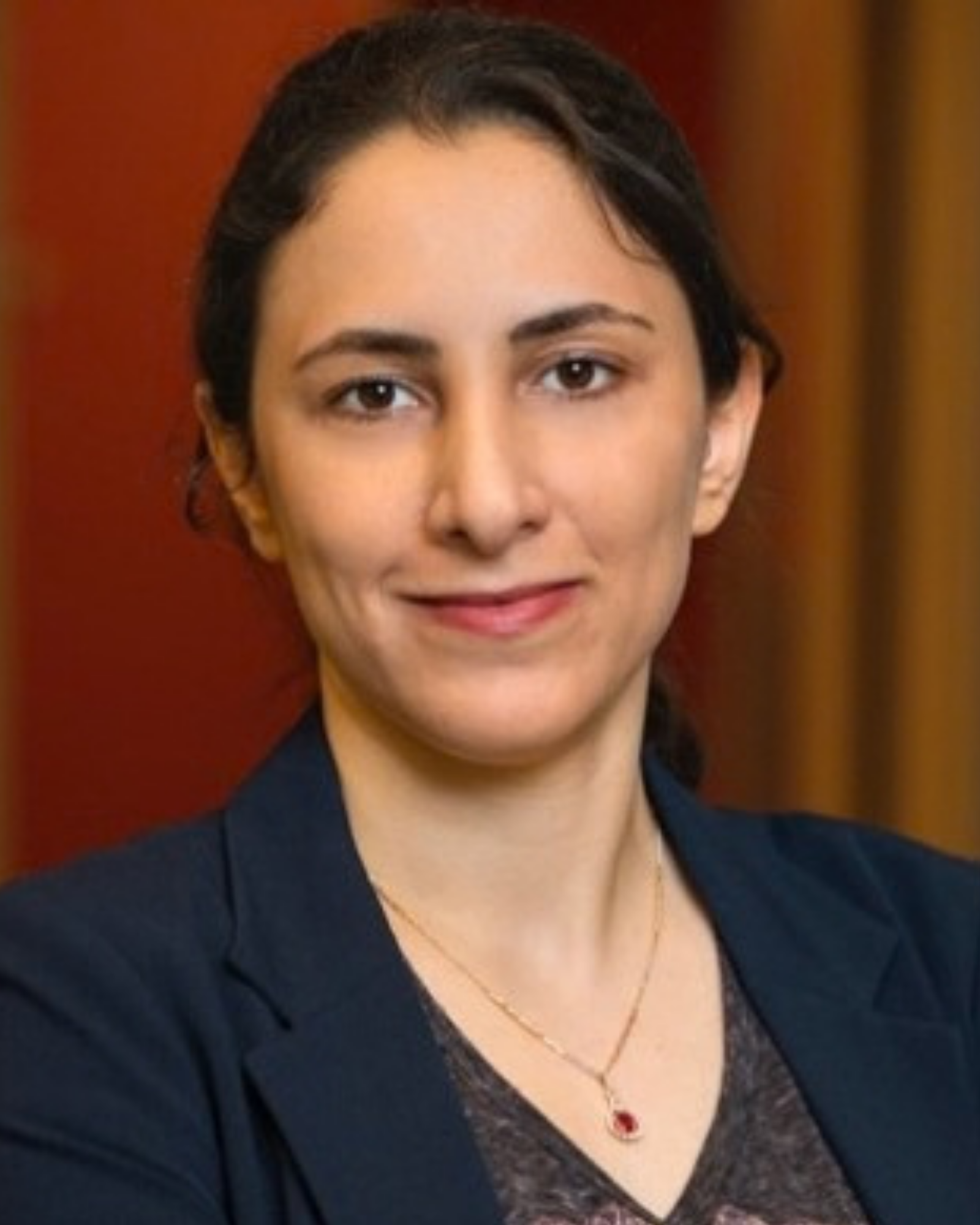
Prof. Mahsa Shoaran
Associate Professor, EPFL | Director, Integrated Neurotechnologies Laboratory
Mahsa Shoaran is currently an Associate Professor in Electrical and Micro Engineering and Neuro-X at EPFL and Director of the Integrated Neurotechnologies Laboratory. From 2018 to 2020, she was an Assistant Professor of ECE at Cornell University, and a Postdoctoral Fellow at Caltech from 2015 to 2017. She received her Ph.D. from EPFL in 2015 and her B.Sc. and M.Sc. from Sharif University of Technology.
Dr. Shoaran is a recipient of the ERC Starting Grant (2021) and the Google Faculty Research Award in Machine Learning and Data Mining (2019). Her team received the IEEE SSCS–Brain Best Paper Award in 2022. Her research focuses on low-power integrated circuit design for implantable systems, machine-learning algorithms and hardware for intelligent neural interfaces, and brain-computer interfaces.
Prof. Shoaran serves (or has served) on the Technical Program Committees of the IEEE ISSCC, CICC, and NER, as a TBioCAS Associate Editor, and on the ISSCC SRP committee.